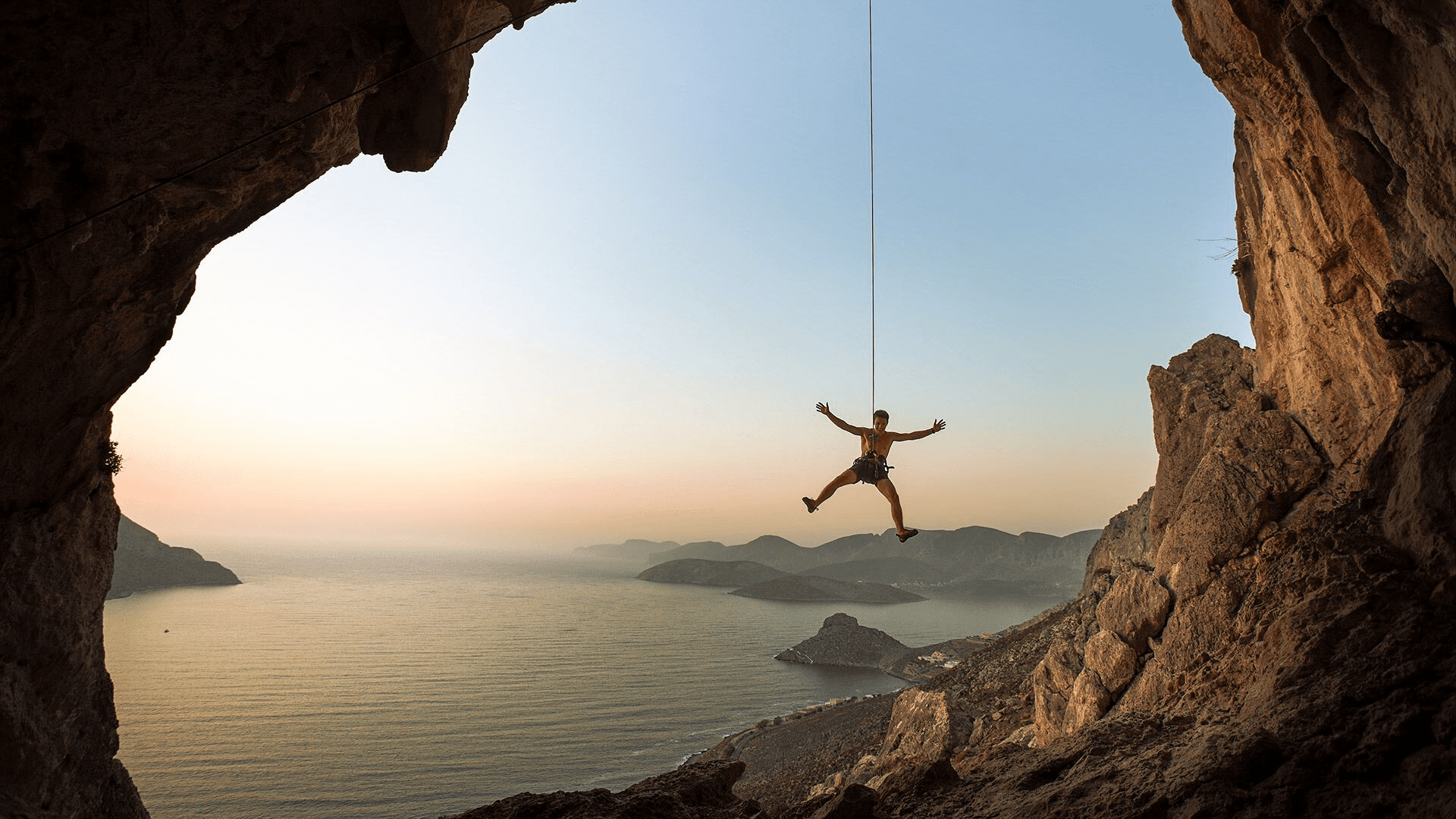
Kalymnos, Greece — where primal fear meets the Aegean. Photo: FearLab
If you can't think of a recent time, you're probably like most people: living a comfortable, controlled life with minimal exposure to real risk. Sounds like the goal, right? Unfortunately not. New research is beginning to show that those who don't expose themselves to primal fear are at increased risk of developing anxiety disorders. That's because the modern anxiety epidemic isn't a mental health crisis — it's a comfort crisis.
This idea is contrary to current wisdom that anxiety is caused by chemical imbalances, a lack of sufficient coping tools, or unprocessed trauma. Those are all angles for fighting anxiety, but they don't address the root cause: we were biologically designed to manage primal fear, and modern life lacks it completely.
The result? We substitute in the next closest risk that resembles primal fear, so we have something to manage. Our body interprets threats to our jobs, our income, or our social rank with the same magnitude it would give to a mortal threat. What's wrong with that? The result of losing our job or friend group does not mean death — so it's a massive judgement error that causes significant, unnecessary stress.
The Honnold Evidence
The best example of how regularly exposing yourself to risk rewires your fear response is Alex Honnold's brain MRI scans. Neuroscientists found that his amygdala showed no activation in response to threatening images that would trigger normal people. Some theorized this is what allowed him to free solo. However the reverse may also be true — that his repeated exposure to risk fundamentally altered his fear response, allowing his brain to replace fear circuits with fear management circuits.
If you recreationally rock climb, you may already know this feeling. The moment your fear circuits light up versus the moment your fear management circuits take over. For me, it happens on a sport climbing lead, when I reach the crux of a climb slightly above my ability. Hands sweating. Elvis leg. The sharp panic of falling three meters to the last bolt. And then — a strong, confident voice cuts through. It is safe. You climb because this is good for you. Move. Everything switches gears.
What Primal Fear Actually Is
Not all fear exposure is equal. There's a commonly reported phenomenon that bungee jumping feels more viscerally terrifying than skydiving — because our depth perception evolved to register cliff edges as mortal threat, whereas altitude so high that the ground doesn't register isn't something our biology prepared for.
In freediving, the body registers fear of drowning in a way it never does during scuba, despite going to the same depth. In sport lead climbing, the body is terrified of falling in a way it never is while bouldering. Camping in the African bush with lions audible nearby is infinitely more terrifying than camping in a fenced site — because the fear of predators is hardwired.
These are primal fears. And they are the specific stimulus that builds fear management circuits.
I call the development of these fear management skills Fear Literacy. And as with any literacy, once you have it, you can't unknow it. The courage you build on a cliff face doesn't stay on the cliff.
I stood at the edge of the Victoria Falls bridge in Zambia, looking down between my toes at 111 meters of nothing. The guide told me if I didn't jump on the count of three, he'd push me. "1, 2, 3—" I forced a dive headfirst off the bridge. Five of the most terrifying seconds of my life. And when the rope tensed and I rebounded, I couldn't stop grinning. "I didn't die. Now I can do anything."
The confidence that comes from facing risk and coming out the other side doesn't wash off. We can't eliminate fear — so we might as well point it at something that deserves it.
ABOUT THE AUTHOR
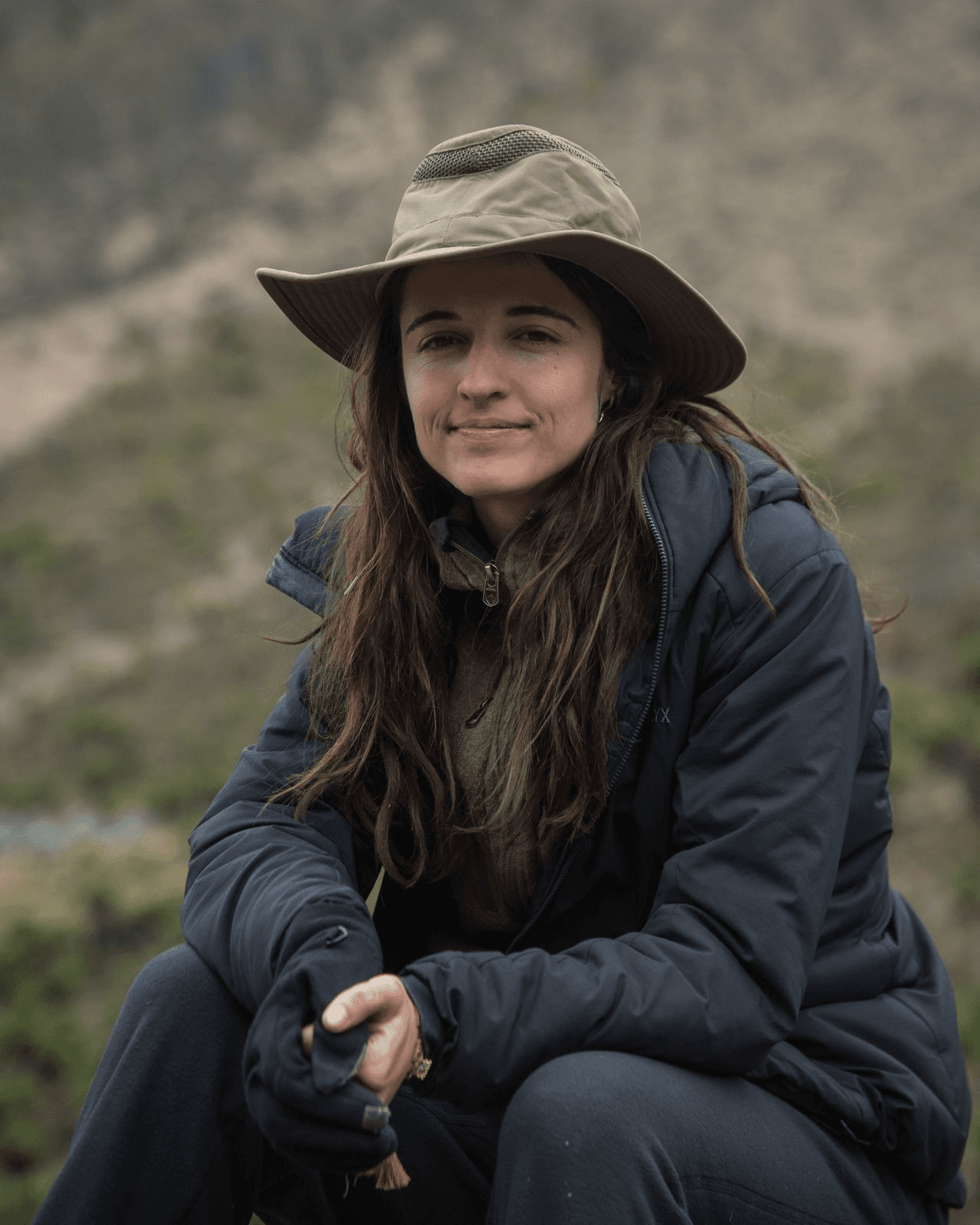
Vas Daskalakis
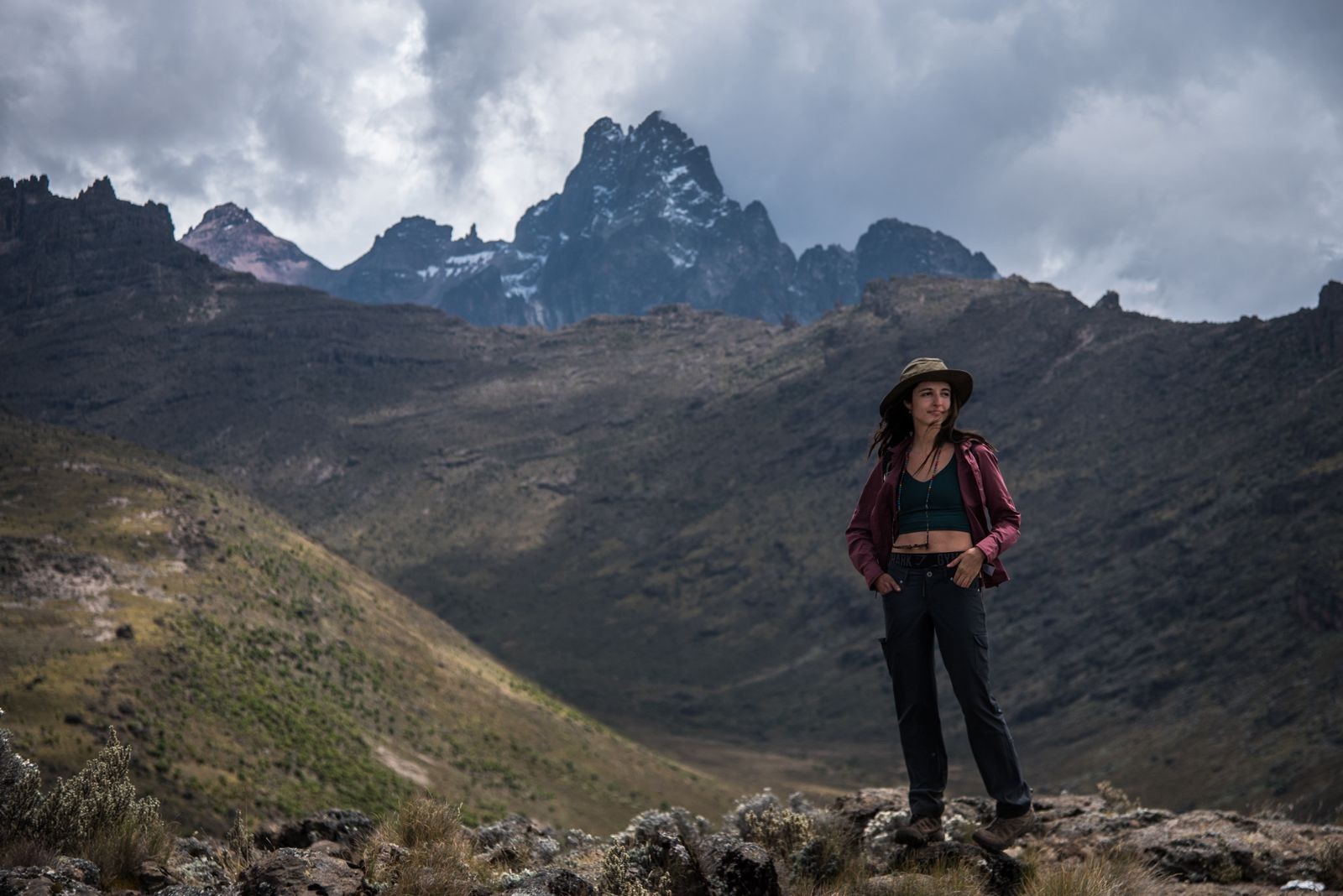
Greek-American climber, founder, and fear literacy researcher. Built and sold two companies. Six years in Kenya. Now building FearLab.
Read full bio
ABOUT THE AUTHOR
Greek-American climber, founder, and fear literacy researcher. Built and sold two companies. Six years in Kenya. Now building FearLab.
READY TO TEST THIS?
Experience fear literacy in the field
FearLab runs small-group expeditions to Kalymnos, Kenya, and beyond. Built around the ideas in this essay.
See upcoming trips
All Published Essays